
What is the wellness tourism boom?
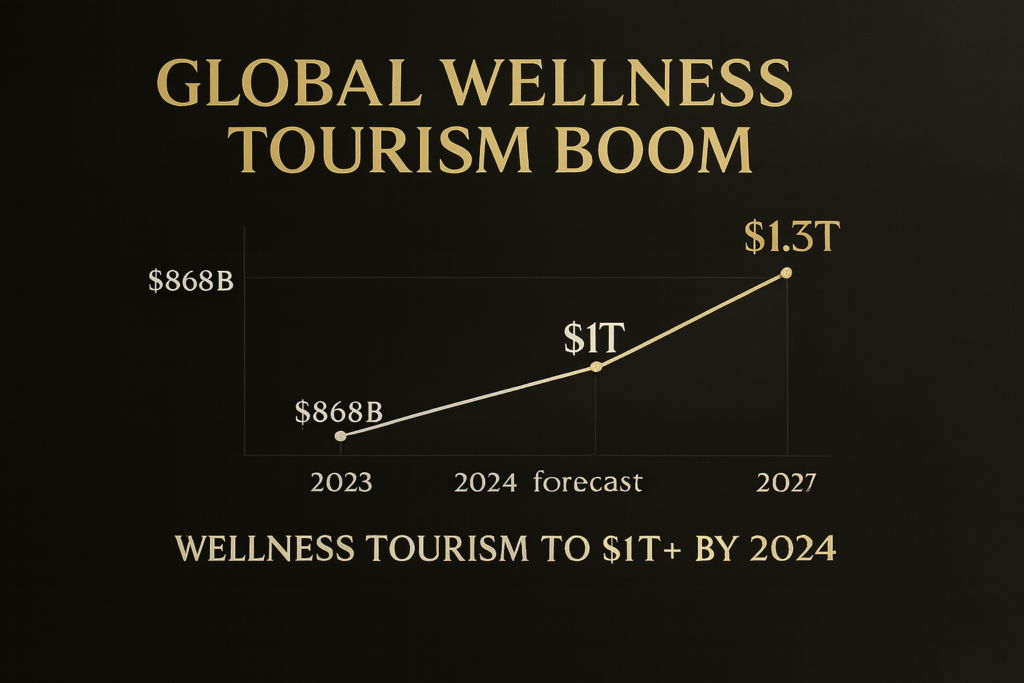
The wellness tourism boom is the rapid growth of health-focused travel, projected to exceed $1 trillion by 2024.
The Global Wellness Institute reports that the global wellness economy reached $5.6 trillion in 2022 and will expand by 8.6% CAGR through 2027. Wellness trips, though just 8% of journeys, account for nearly 19% of tourism spend—underscoring their premium nature.
For broader context, read our Lombok Tourism Growth Strategy, which shows how destinations are leveraging wellness to drive sustainable growth.
Why are yoga retreats no longer enough?
Many resorts still rely on yoga classes and spa menus. While popular, this model underserves today’s traveler. Guests want outcomes—better metabolic health, improved sleep, emotional resilience.
The McKinsey Future of Wellness Report confirms: the wellness market now exceeds $2 trillion, with the fastest growth in weight management, mental health, women’s wellness, and fitness.
Relying on yoga-only programs leaves money on the table.
What opportunities go beyond yoga and spas?
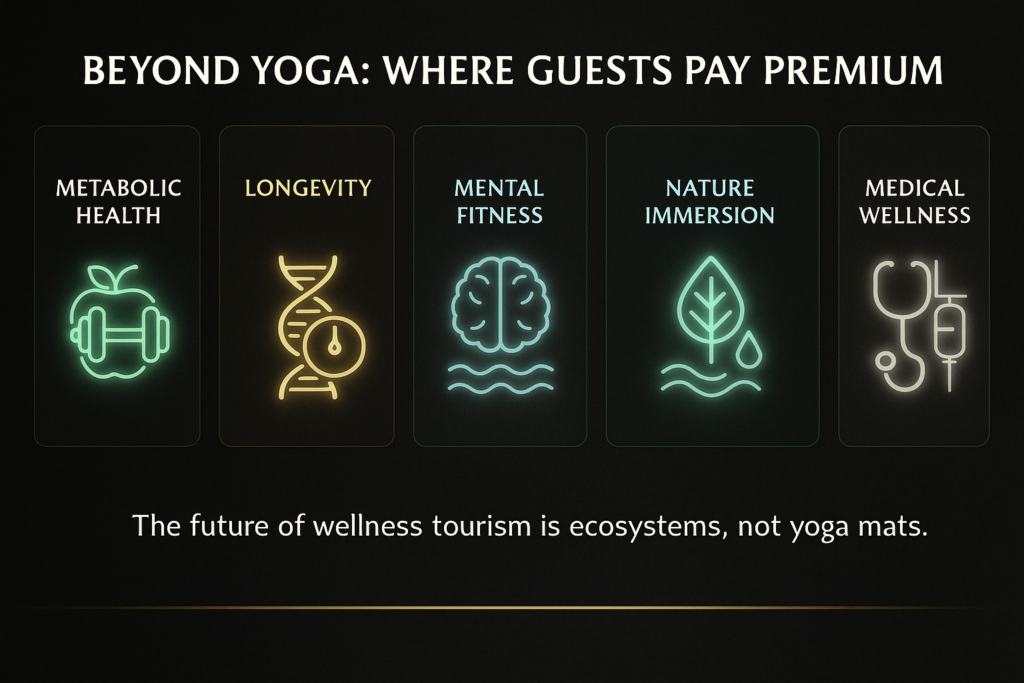
The new demand clusters include:
- Metabolic health & weight management – protein-prioritized menus, GLP-1 aware nutrition, strength training.
- Longevity & performance – VO₂ testing, HRV, sleep optimization, heat/cold recovery.
- Mental fitness – nervous system regulation, coaching, stress monitoring.
- Nature immersion – guided forest bathing, outdoor breathwork, ocean plunges.
- Medical-adjacent care – IV therapies, functional medicine, TCM consultations.
These offerings unlock higher ADR multipliers and longer stays than yoga/spa alone.
How to design integrated wellness ecosystems?
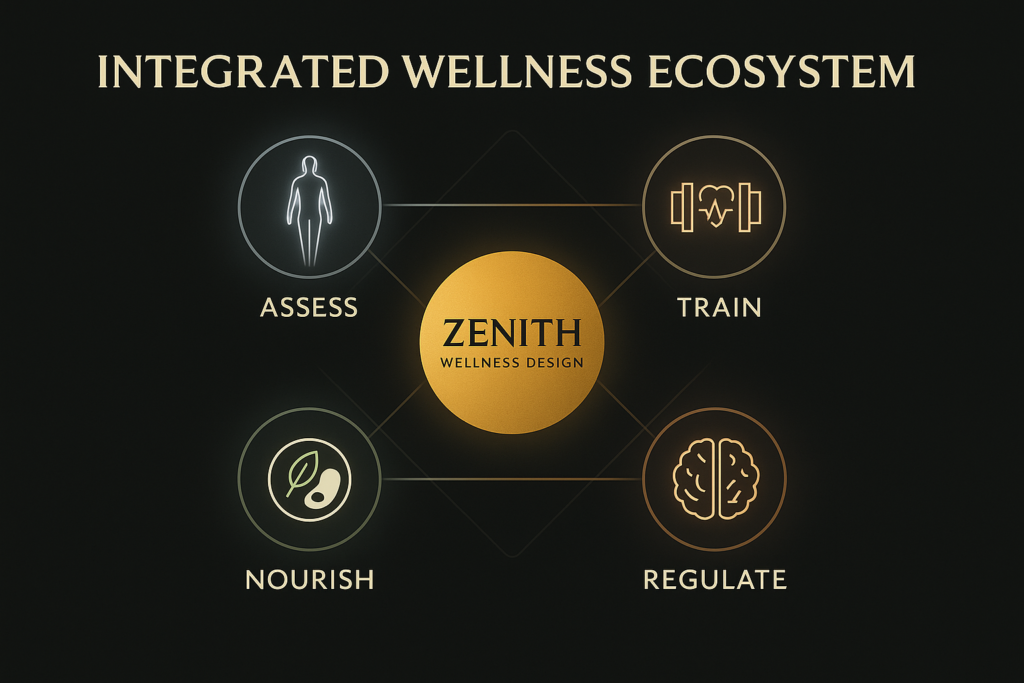
Zenith Hospitality Global designs resorts around a Four-Pillar Wellness Ecosystem:
- Assess – diagnostics, sleep/lifestyle baselines, optional physician intake.
- Train – structured movement, mobility, conditioning, recovery.
- Nourish – metabolic cuisine, teaching kitchens, mindful nutrition.
- Regulate – mental fitness, sleep camps, biofeedback, nature immersion.
Each pillar scales—from boutique retreats to full resorts—while ensuring commercial rigor.
For an example of balancing wellness with destination planning, see our Bali Overcrowding Action Plan.
Which programs drive ROI in wellness tourism?
Guests pay premium prices when programs deliver measurable outcomes.
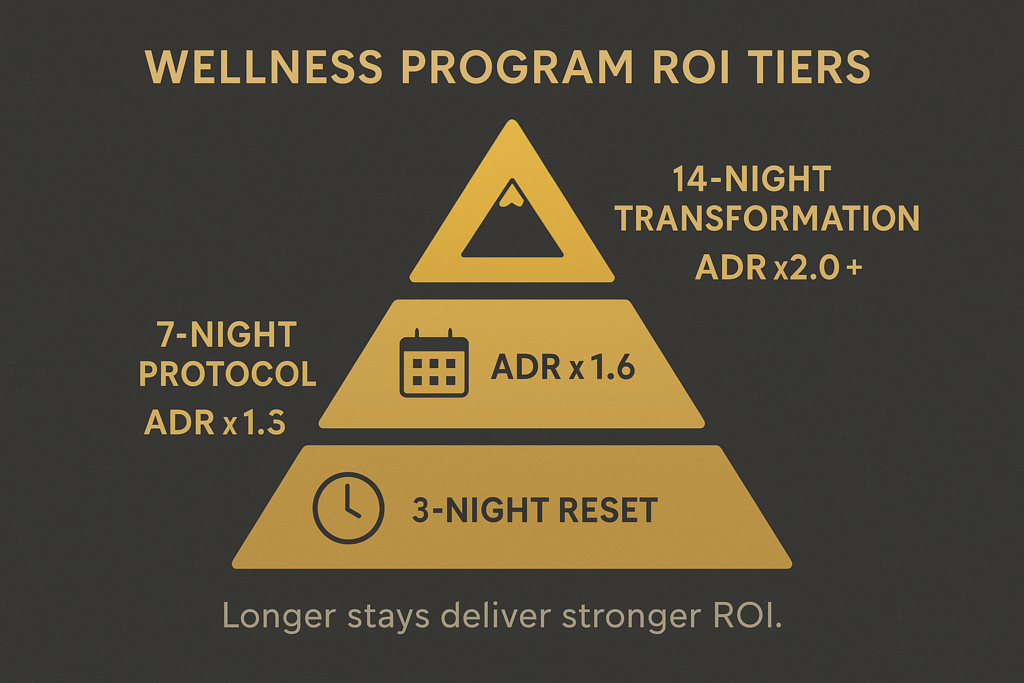
Program structures:
- 3-Night Reset: Intro diagnostics + tasters.
- 7-Night Protocol: Structured training, nutrition, sleep, stress.
- 14-Night Transformation: Medical screens, guided plan, aftercare.
Ancillary revenue: diagnostics ($300–$2,500), IV therapies ($150–$800), PT ($60–$180/hr), nutraceutical kits, tele-coaching.
Case study: SHA Wellness Clinic charges premium packages across Spain, Mexico, and Emirates, proving ROI potential.
What facilities define next-generation wellness resorts?
- Clinical Core: consult rooms, IV suites, labs (via partner clinics).
- Performance Zone: 250–400 m² gym, cardio & recovery lounges.
- Mind & Sleep: sound therapy studios, sleep labs, breathwork spaces.
- Nature Circuits: forest trails, open-air recovery decks, sunrise points.
- Nutrition Labs: metabolic kitchens, workshops, dietitian consults.
Together, they form a complete ecosystem, not just a spa.
How do leading brands set the benchmark?
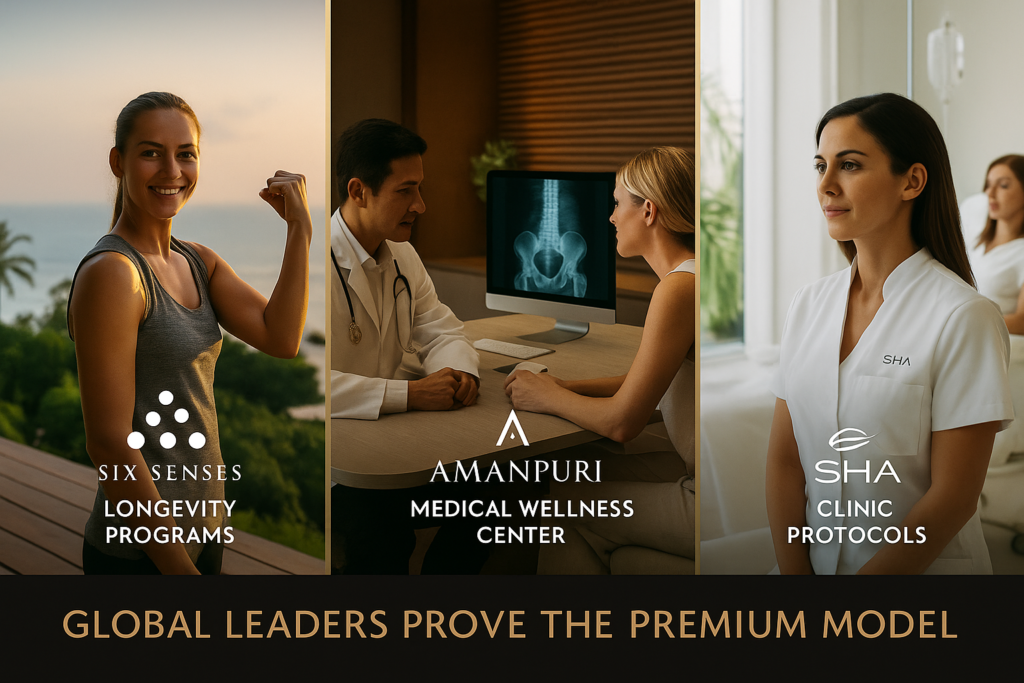
- Six Senses: longevity and biohacking tracks (Six Senses Wellness).
- Amanpuri: on-property medical wellness center (Amanpuri Wellness Programs).
- SHA Wellness: clinical protocols with global expansion.
Each shows that premium wellness is now evidence-based and medically supported.
For comparison, see our Bali Real Estate Bubble article, which warns how underdeveloped concepts can destroy ROI.
What KPIs matter for wellness investors?
Beyond spa revenue, track:
- Program RevPAR (program fees/available room).
- Assessment attach rate (% guests opting for diagnostics).
- Ancillary spend per guest (PT, IVs, supplements).
- Outcome compliance (program completion rates).
- LoS uplift (longer stays vs. non-program guests).
These KPIs determine whether wellness offerings are profitable or cosmetic.
FAQ
1. Why is wellness tourism booming?
Because travelers want measurable health outcomes, not just leisure.
2. What’s wrong with yoga-only retreats?
They ignore the broader demand for nutrition, fitness, and medical wellness.
3. Which wellness programs are most profitable?
Metabolic resets, longevity protocols, and clinical wellness packages.
4. What facilities are essential?
Integrated clinics, gyms, mental fitness spaces, and nature immersion circuits.
5. How does Zenith design wellness resorts?
By blending medicine, sports, nutrition, and culture into evidence-based ecosystems.
How to design a wellness program in 3 steps (HowTo Schema)
- Assess guest baselines: health, fitness, sleep, stress.
- Build Four Pillars: Train, Nourish, Regulate, Measure.
- Package stays: 3-, 7-, and 14-night programs with measurable results.
Conclusion
The wellness tourism boom is changing the landscape. Guests no longer accept yoga + spa as the standard. They demand ecosystems integrating fitness, nutrition, medical wellness, mental health, and nature.
For investors and operators, this shift represents a premium ROI opportunity—but only if projects are designed with evidence, cross-disciplinary expertise, and commercial discipline.
Zenith Hospitality Global builds resorts that are holistic, defensible, and outcome-driven—ensuring that investors capture both yield and guest loyalty.

Call to Action
Don’t stop at yoga.
Zenith Hospitality Global creates wellness resorts that combine medical wellness, sports, nutrition, digital detox, and cultural immersion.
📖 Read next: Managing Destination Overcrowding in Bali