
Why Is a Generic Spa No Longer Enough in Luxury Hospitality?
The wellness imperative reflects a dramatic shift in guest expectations.
Today’s luxury travelers seek physical vitality, mental clarity, emotional balance, and spiritual depth—all in one stay.
A sauna and massage list no longer suffice. Instead, travelers are looking for personalized detox programs, energy healing, circadian biohacks, and longevity diagnostics.
In short, the spa has evolved into an ecosystem.
According to Zenith Hospitality Global’s 2025 internal analysis, luxury wellness travelers now spend 35 percent more than typical tourists and often stay 30–50 percent longer.
Resorts embracing this shift are achieving up to 450 percent higher RevPAR.
The business case is unambiguous.

How Are Bali Resorts Leading the Wellness Transformation?
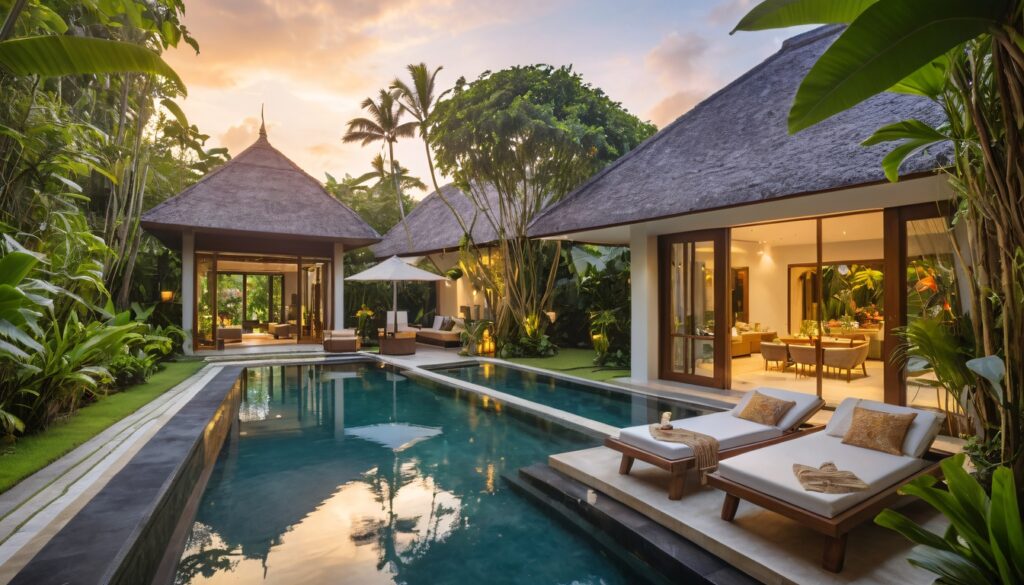
Bali has emerged as the global benchmark for transformative wellness.
Rooted in spiritual traditions and framed by lush natural beauty, its top retreats go far beyond pampering:
- COMO Shambhala Estate – delivers tailored wellness paths with Ayurvedic consultations, hydrotherapy, and vitality dining.
- Four Seasons Sayan – integrates Balinese chakra rituals with forest immersion and spiritual cleansing.
- REVĪVŌ Wellness Resort – offers diagnostic-led longevity programs with IV drips, infrared therapy, and anti-aging protocols.
- Fivelements Retreat Bali – focuses on plant-based nutrition, traditional healing, and sacred energy alignment.

What makes Bali unique is its authenticity.
Guests don’t just visit spas; they enter sanctuaries where nature, culture, and neuroscience converge.
In summary, Bali demonstrates that deeply local, spiritually grounded experiences outperform generic global luxury.
What Can Global Resorts Learn from Bali?
Outside of Indonesia, top-tier resorts in Thailand, Spain, Switzerland, and the U.S. are experimenting with similar models.
At SHA Wellness Clinic (Spain), personalized anti-aging treatments blend with medical diagnostics.
Six Senses Douro Valley (Portugal) offers sleep biohacking and yoga nidra therapies.
Common success traits include:
- Personalization – Tailored nutrition, diagnostics, and programming.
- Holistic Modalities – Mental, physical, emotional, and spiritual integration.
- Scientific Rigor – Medical-grade technologies and biomarker tracking.
- Local Authenticity – Culturally anchored rituals and therapies.
To summarize, global leaders are blending ancestral wisdom with next-gen wellness science to build loyalty, drive rate premiums, and extend length of stay.
How Can Brands Embed the Wellness Imperative into Their DNA?
Wellness isn’t a department. It’s a strategy.
Here’s how operators can hardwire holistic wellness into their brand proposition:
- Design for Health – Biophilic spaces, natural light, air purification, sleep-optimized suites.
- Hire Healing Talent – Curate resident practitioners and credentialed experts.
- Integrate Longevity – Add diagnostics, hormone mapping, and epigenetic coaching.
- Honor Local Rituals – Co-create offerings with regional healers and spiritual leaders.
- Sustainability Alignment – Wellness and planetary care now go hand-in-hand.
In essence, guests are no longer just consuming hospitality. They are investing in their future selves.

What’s the Investor Opportunity in Wellness Real Estate?
The wellness real-estate pipeline is growing fast:
- Wellness tourism projected to exceed $1 trillion by 2024.
- Year-round occupancy rates often reach 90–100 percent at wellness-led resorts.
- Repeat guest rates can exceed 40 percent, often with minimal discounting.
Properties that move from spa amenity to full-spectrum wellness destination are seeing unmatched investor interest.
CAPEX may be higher, but so is ROI—especially as wellness becomes a driver of brand value, not just margin.
To conclude, investing in wellness is no longer speculative. It’s strategic.
Summary Takeaways
- A generic spa offering is no longer competitive.
- Wellness is now a core differentiator for luxury hospitality.
- Bali’s resorts set the benchmark for holistic, authentic wellness.
- Global leaders are integrating science, spirituality, and sustainability.
- Full-spectrum wellness drives higher guest spend, loyalty, and RevPAR.
FAQ: The Wellness Imperative
What is the wellness imperative?
It’s the strategic need to embed immersive wellness into luxury hospitality beyond the traditional spa model.
Why are travelers demanding more than spas?
They seek transformation: physical vitality, emotional clarity, and mental resilience.
What’s the ROI of wellness hospitality?
Wellness-focused resorts report up to 450 percent higher RevPAR than traditional luxury properties.
Why is Bali leading this trend?
Bali uniquely integrates spirituality, culture, and nature into deeply authentic healing experiences.
How can a hotel start this transition?
Begin by embedding wellness into design, hiring, programming, and sustainability practices.
Ready to Future-Proof Your Property?
Book a consultation with our wellness-concepting team.
👉 Contact Zenith Hospitality Global
Explore More
- Designing the Ultimate Pre-Opening SOP Checklist: Why Great Hotels Never “Fix Things After Opening”
- The Future of Wellness Tourism 2025: Global Trends and Why Bali Leads the Way
- Managing Overcrowding in Bali Tourism: 6-Pillar Action Plan from WTTC 2025
- Hospitality ROI Miscalculations: Why Projects Fail Early
Entities Covered: Bali Tourism Board, COMO Shambhala Estate, REVĪVŌ Wellness Resort, Zenith Hospitality Global, SHA Wellness Clinic, Six Senses, Four Seasons, Global Wellness Institute.
Author: André Priebs, CEO & Co-Founder, Zenith Hospitality Global | LinkedIn
© Zenith Hospitality Global 2025. All rights reserved.
Compliant with PDPL / GDPR. Last updated: October 2025.