
Introduction: Why Integrated Hospitality in Bali Defines the Next Investment Cycle
Integrated hospitality in Bali is rapidly becoming the island’s new investment frontier. For years, standalone villas were Bali’s go-to asset class — promising double-digit yields and “passive” income. But in 2025, the truth is undeniable: the villa market is oversaturated, and returns are shrinking.
According to Zenith Hospitality Global’s internal 2025 market review, average villa occupancy has fallen below 55% in Canggu and Uluwatu, while nightly rates continue to slide amid cutthroat competition. The days of “build a villa, post it on Airbnb, and profit” are over.
The new opportunity lies in integrated ecosystems — developments that blend accommodation with wellness, F&B, co-working, and lifestyle spaces. These projects are not just hotels; they are micro-destinations that align with how modern travelers want to live, work, and rejuvenate in Bali.
In short: the future of Bali hospitality is integration, not isolation.

Why the Bali Villa Market is Collapsing — and Why Integrated Hospitality in Bali Wins
Oversupply and Rate Erosion
The villa market has grown faster than demand. Bali now counts over 30,000+ active vacation rentals, and in Canggu alone listings jumped by 18% in a single year. Despite a record 3.3 million foreign arrivals in H1 2025, booking values dropped 21.6% year-on-year as guests chased discounts.
| Metric (2025) | Standalone Villas | Professionally Managed Resorts |
|---|---|---|
| Occupancy (avg.) | 48–60% | 70–80% |
| ADR (Average Daily Rate) | USD 170 | USD 235 |
| ROI (Net Yield) | 4–6% | 10–14% |
| Payback Period | 10–12 years | 5–7 years |
In short, too many villas are chasing too few guests. The glut is forcing nightly discounts (averaging -19%) and extending downtime between bookings.
Investor Fatigue and ROI Reality Check
The once-lucrative villa segment has become a treadmill of management headaches. Owners now face higher taxes, licensing hurdles, and dependence on OTAs. What’s left is a shrinking profit margin — often half of what brochures promise.
“We’re witnessing the natural correction of a market that grew too fast,” explains Eugene Tienkaiev, COO of Zenith Hospitality Global. “Investors who shift toward integrated ecosystems are the ones future-proofing their returns.”
As Zenith’s 2025 internal models show, realistic yields on newly built villas hover between 4–6%, not the “guaranteed 15%” many developers still advertise.
In short: the market is full of luxury shells competing in a discount war.

Why Integrated Hospitality in Bali Outperforms Standalone Villas
Occupancy Stability and Brand Power
Professionally managed resorts in Bali sustain occupancy above 70% year-round thanks to global distribution, brand visibility, and corporate channels. Villas, by contrast, rely on last-minute price wars on crowded platforms.
Hotels can deploy dynamic yield systems and loyalty programs that maintain rates during the low season — a structural advantage that individual owners cannot match.
Multi-Revenue Model
A villa earns only from nightly stays. Integrated resorts monetize multiple channels:
- Restaurants & cafés (open to locals and tourists)
- Memberships (gym, spa, co-working)
- Wellness programs and retreats
- Retail and events
Even if room occupancy dips, other facilities sustain cash flow — a key reason integrated developments show double the ROI resilience of standalone villas.
Operational Efficiency
With shared staff, centralized marketing, and standardized SOPs, integrated projects achieve economies of scale no single villa can. A unified operations team can maintain 20–50 units while optimizing costs and service quality.
In summary: scale and structure beat independence.
(Image 3 — ALT: Integrated hospitality resort in Bali with co-working and café)
The Traveler Has Evolved — And So Must Bali’s Hospitality Model
From Isolation to Experience
Today’s travelers no longer want to “stay” in Bali. They want to belong. They seek connection, discovery, and transformation — values that standalone villas rarely deliver.
In 2024–2025, experience-led tourism in Bali grew 27% year-on-year, driven by wellness, culture, co-working, and community living. Integrated hospitality answers all four.
To summarize: experience-led travelers reward integration over isolation.
The Rise of Wellness and Longevity Travel
Bali’s wellness sector is projected to surpass USD 600 million annually by 2026, led by yoga, IV therapy, recovery spas, and holistic nutrition. Guests now choose resorts offering fitness studios, detox cafés, and nature-linked design — not just pools and beds.
Standalone villas cannot replicate the credibility or infrastructure of a full wellness experience. Integrated resorts can.
The Digital Nomad Wave
Indonesia’s “Second Home Visa” and extended-stay policies have turned Bali into a magnet for remote professionals. This group demands fast Wi-Fi, co-working lounges, social hubs, and flexible rental structures.
Integrated resorts now capture 40–60% of long-stay bookings in hubs like Ubud and Pererenan — a figure expected to climb through 2026.
External sources:
- WTTC – Global Wellness Tourism Report 2024
- Colliers – Bali Hospitality Outlook 2025
- Bali Tourism Board Statistics 2025
- Statista – Indonesia Hotel Occupancy Rates 2025
- Booking.com – Travel Predictions 2025
The Integrated Hospitality Model: A Case Study from Bali
Secana Beachtown, Berawa demonstrates this evolution. The development merges 58 pool villas and 32 loft suites with rooftop pool club, restaurants, gym, Pilates studio, spa, and co-working lounge — all under one management.
It redefines guest value: villa privacy plus resort-grade convenience.
This “all-in-one destination” model perfectly captures where the market is heading.
| Value Driver | Integrated Model | Standalone Villa |
|---|---|---|
| Revenue Streams | 5–7 diversified | 1 (room rental) |
| Brand Equity | Strong (branded) | None |
| Guest Loyalty | High (community) | Low |
| Management Burden | Outsourced | Owner-managed |
| Market Resilience | High | Low |
Integration is no longer a luxury — it’s a survival strategy.

Zenith’s View: Why Integrated Hospitality in Bali Defines the Future
At Zenith Hospitality Global, we forecast that by 2030, over 60% of Bali’s profitable assets will be integrated or branded mixed-use developments.
Our data shows that projects combining accommodation, wellness, F&B, and community infrastructure consistently outperform single-use properties in:
- Guest Retention (+35%)
- Average Length of Stay (+28%)
- Net ROI (+6–9%)
This is not a short-term trend — it’s a structural transformation. The future of Bali hospitality belongs to ecosystems, not buildings.
Summary Takeaways
- Bali’s villa market is oversaturated, with net yields falling to 4–6%.
- Integrated developments achieve 70–80% occupancy and double ROI.
- Travelers now expect wellness, community, and convenience.
- Multi-revenue ecosystems ensure year-round resilience.
- The future of Bali hospitality is experience-led integration.
FAQs
1. What is Integrated Hospitality in Bali?
A model combining accommodation with F&B, wellness, and co-working under one management.
2. Why are standalone villas losing ROI?
Oversupply and inconsistent occupancy are eroding margins.
3. What’s the ROI difference?
Integrated resorts: 10–14% ROI; standalone villas: 4–6%.
4. How do integrated resorts attract digital nomads?
Through co-working spaces, social amenities, and strong connectivity.
5. Is Bali still investor-friendly?
Yes — but only for projects blending sustainability, experience, and integration.

Call to Action
If you’re planning a hospitality or villa project in Bali, don’t build another unit — build an ecosystem.
Zenith Hospitality Global helps investors transform standalone assets into integrated destinations with superior performance.
👉 Book a Consultation with Zenith Hospitality Global
Read next:
- The ROI Lie: Deconstructing Hospitality ROI in Southeast Asia
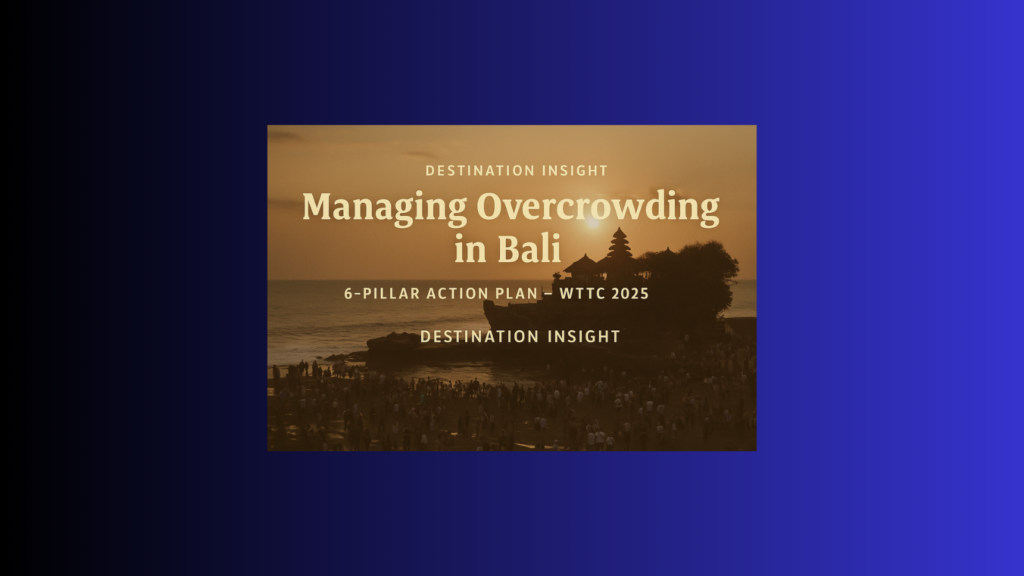
- Managing Destination Overcrowding in Bali: A Strategic Call to Action
- Lombok Tourism Growth Strategy
By André Priebs, CEO & Co-Founder, Zenith Hospitality Global