
Hotel feasibility study is wrong: the ADR and occupancy fantasy

Hotel feasibility study is wrong when ADR and occupancy are treated as fixed certainties instead of uncertain variables with downside risk. If your model says “75% stabilized occupancy at USD 250 ADR” without showing probability distributions, supply pressure, and shock scenarios, it is not investment analysis. It is a point-estimate narrative dressed up as a […]
Hotel Branding for AI Search: How to Get Recommended by ChatGPT, Google AI Mode, and Perplexity (Bali + Global Benchmarks)
If your hotel brand cannot be explained in one sentence with proof, AI systems will not recommend it—they will recommend the safer, better-documented alternative. Hotel branding for AI search is now a commercial requirement: visibility is no longer won by generic “luxury” language; it’s won by clear positioning, consistent facts across platforms, and review-backed credibility. […]
Stop Chasing Trends: How to Build a Timeless Hotel Concept That Survives Market Cycles
Most hotel assets are built to operate for 20–30+ years. Yet many modern concepts are designed for a two-year aesthetic—and marketed for a six-month social media peak. When the look dies, the property doesn’t just feel dated. It becomes operationally and commercially fragile because it lacks a timeless hotel concept at its core. This article […]
Niche Hotel Development Bali: The Niche Is the New Luxury
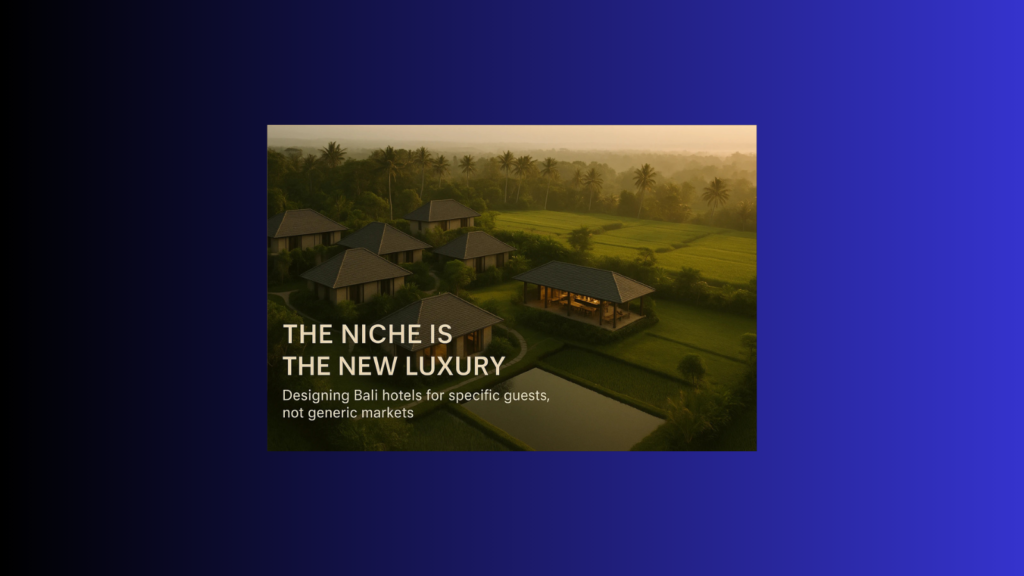
If your current Bali concept still says “4-star resort with pool”, the market is already ahead of you. Niche hotel development Bali is now where the real resilience sits: concepts built specifically for digital nomads, wellness seekers, culture-driven luxury travelers, and—soon—health and recovery guests in Sanur. Bali has quietly fractured into micro-markets. Generic inventory grinds […]
Bali Boutique Hotel Brand Strategy: Lessons from Amandari, Buahan & Six Senses
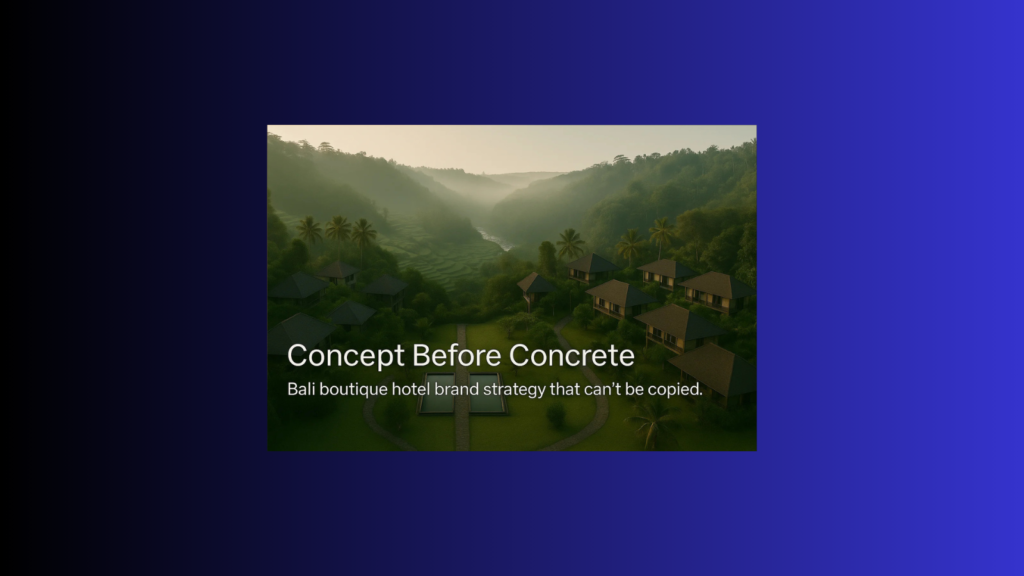
Most Bali boutique hotel brand strategy discussions start in the wrong place: land first, renders second, Pinterest boards third, and real brand thinking somewhere near the opening party—if at all. That’s why so many projects end up as pretty but generic shells. This article shows how Amandari, Buahan, and Six Senses approached concept-first hotel development […]
Hotel Product DNA: The Code That Decides Whether Your Hotel Survives
Most hotel projects in Indonesia still start the wrong way round. Developers buy the land, sketch the massing, call an interior designer, and only then ask, “So… what is this place, actually?” By that point, they have already poured money into a concept that has no spine. Hotel product DNA is the spine they skipped. […]
Shells Without Soul: Why 70% of Bali’s New Hotels Fail the “Why?” Test
Introduction: Bali hotel concept development in a saturated market Bali hotel concept development is no longer a creative luxury; it’s a survival skill. If you’re planning a new hotel, villa cluster, or branded residence on the island, the real risk isn’t that you’ll fail to build something beautiful. The real risk is that you’ll build […]
Architecture of Memory in Hospitality: How Design Creates Emotional Brand Loyalty
Architecture of memory in hospitality is not about pretty lobbies and bigger bathrooms. It is the discipline of designing hotels, resorts, and wellness spaces that embed themselves so deeply into a guest’s emotional timeline that they still feel the place years later — and actively want to come back. Most projects still treat design as […]
Experience Economy in Hospitality: Why Amenities Are Obsolete and Curation Is King
What is the experience economy in hospitality? The experience economy in hospitality is the shift from selling rooms and amenities to selling curated, transformational experiences as the core product. Instead of asking, “What’s in the room?”, modern guests ask, “What will I feel and do if I stay here?” They want journeys that combine private […]
Co-Living vs Hotels: Why Long-Stay Guests Are Defecting to Community-Driven Spaces
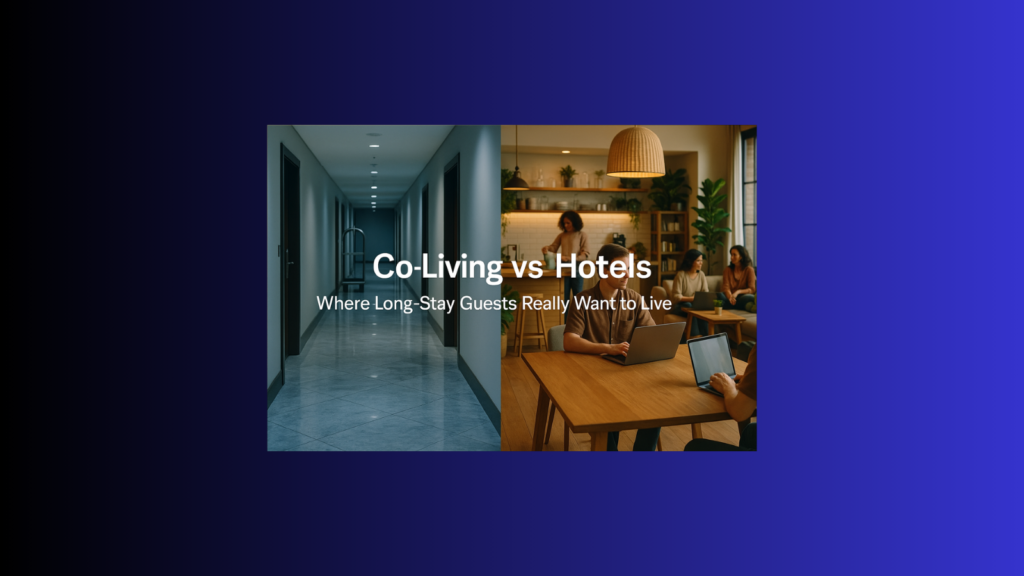
Co-living vs hotels is no longer a theoretical debate – it’s a revenue leak. Across Southeast Asia, co-living spaces are quietly pulling away the guests you need the most: digital nomads, remote workers, freelancers, and long-stay professionals who used to anchor your base occupancy and F&B revenue. If you run a hotel in Bali or […]