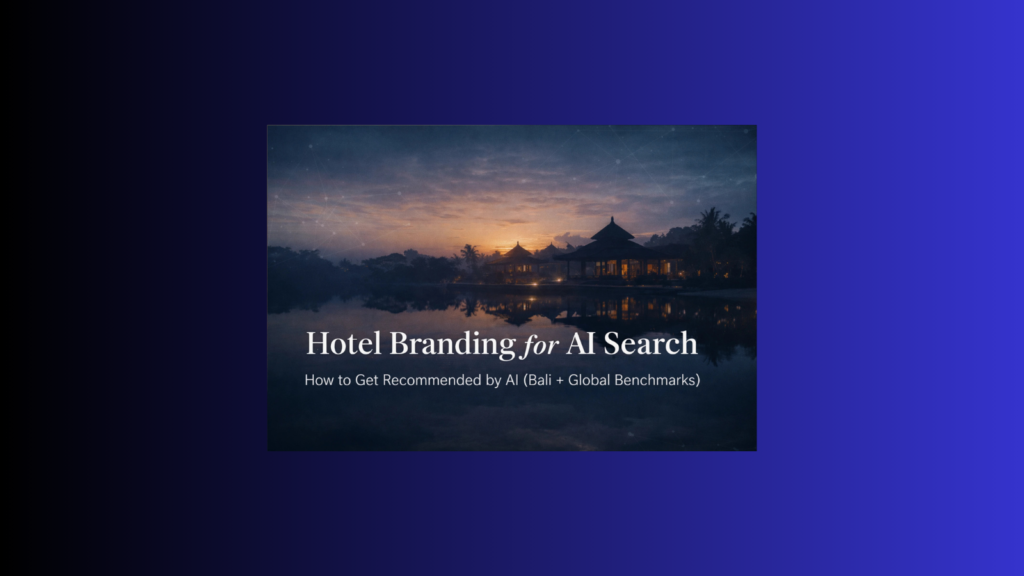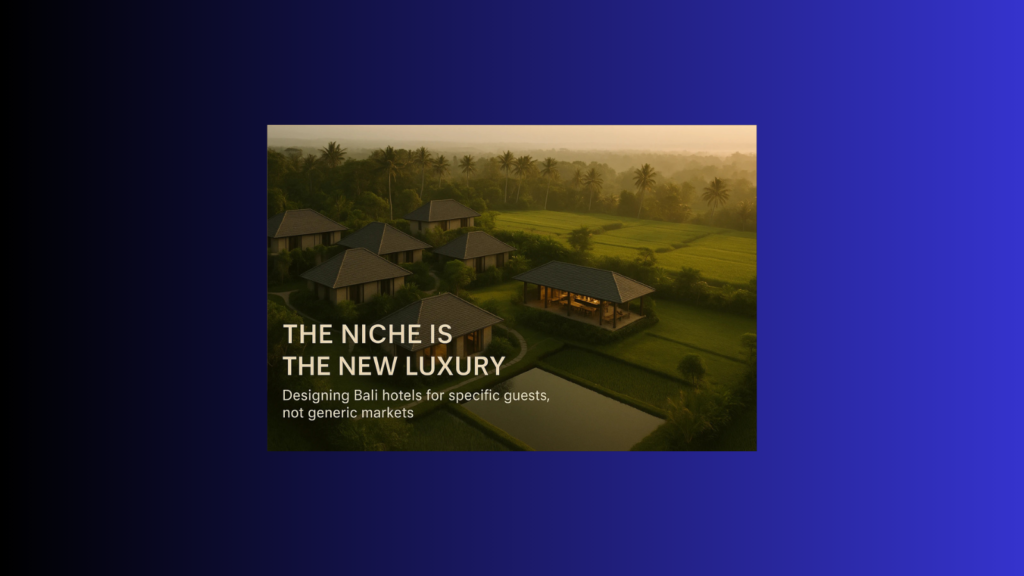
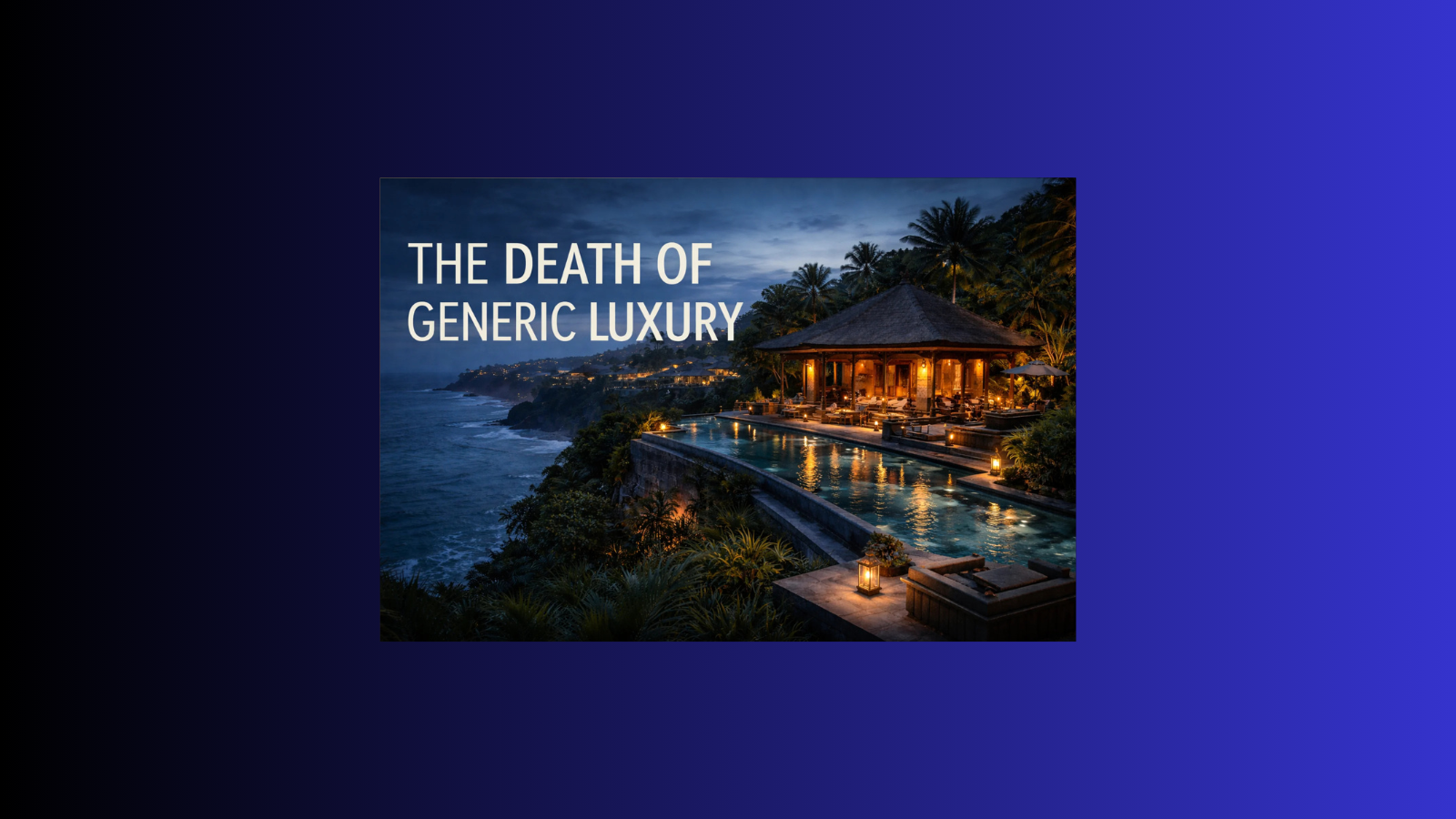
Luxury hospitality is entering a harder, more transparent era. AI hotel personalization strategy is no longer a niche technology topic for innovation teams. It is becoming a commercial requirement for hotels, resorts, and branded residences that want to stay visible, relevant, and premium in an AI-shaped market.
For developers, hotel owners, and technology directors, the threat is straightforward: generic luxury is losing discoverability. As travelers increasingly use AI tools to compare destinations, properties, amenities, reviews, and fit-for-purpose experiences, the hotels with weak positioning and one-size-fits-all guest journeys are becoming easier to ignore. Google is already pushing deeper into AI-assisted trip planning and more personalized AI search experiences, which reinforces the direction of travel for the wider market. Google’s AI travel planning features and Google’s Personal Intelligence in AI Mode make that shift visible.
TL;DR
Generic “luxury” is becoming commercially weaker because AI compresses sameness and rewards clarity.
The next winners will combine distinctive concept positioning, structured guest data, and operationally useful personalization.
In Bali and Indonesia, early movers have a real advantage because many properties still operate with fragmented systems and generic messaging.
Why is generic luxury becoming invisible?
Generic luxury is becoming invisible because AI systems compare properties by signal strength, not by brand adjectives. If ten hotels describe themselves as elegant, premium, curated, and world-class, the machine has little reason to privilege any one of them.
What rises instead is specificity. A hotel with a strong wellness thesis, a clear cultural story, a meaningful family proposition, or a differentiated recovery or longevity offer gives AI something concrete to retrieve, compare, and recommend. That is why distinctive hospitality concepts increasingly outperform templated luxury language. The same pattern is now being discussed across hospitality media, including Hospitality Net’s analysis of how AI is changing hotel website relevance.
This is not just a content problem. It becomes a margin problem very quickly. If your property is difficult for AI to understand, it is harder to surface. If it is harder to surface, it becomes easier to substitute. And if it becomes easier to substitute, rate pressure follows.
What is AI changing in hotel discovery?
AI is changing hotel discovery by collapsing research time and raising the quality threshold for recommendation. Instead of manually checking ten or twenty properties, a traveler can ask an AI assistant for the best wellness-led resort in Bali for sleep recovery, privacy, strong dining, and quiet design—or the best family resort in Indonesia with space, service consistency, and meaningful children’s programming.
That shift matters because it changes how hotels are evaluated. The winning asset is no longer the one with the broadest amenity list. It is the one with the clearest positioning, the cleanest supporting content, and the strongest match to a specific traveler intent.
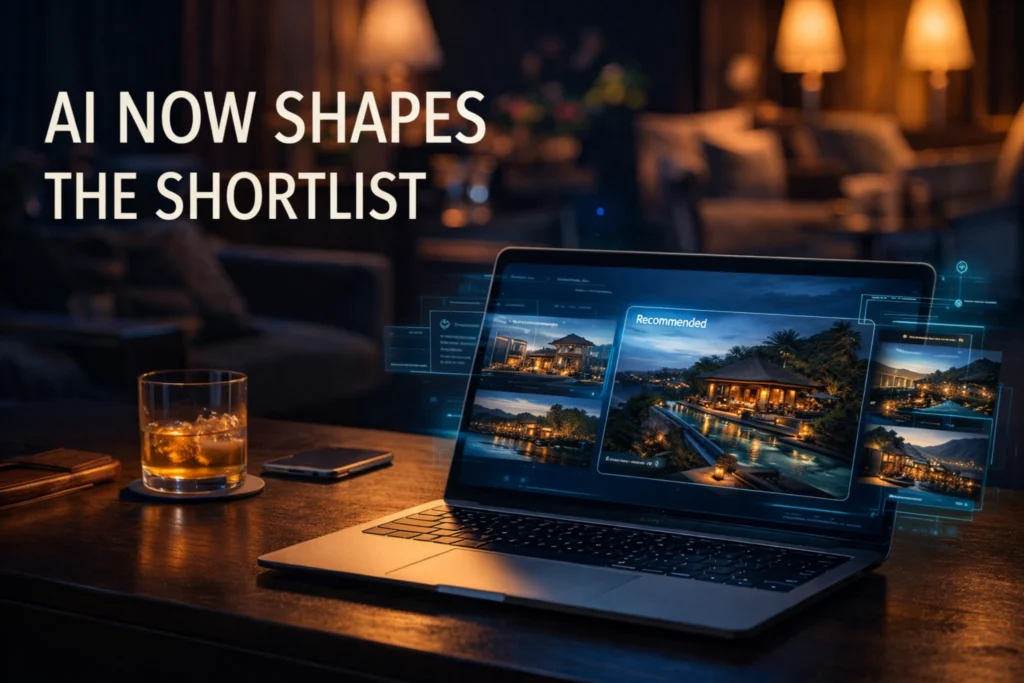
This is exactly why Zenith has been writing more about AI in hospitality in Indonesia and digital transformation in Bali tourism. Search is moving from pages to answers, and that changes the front door of hospitality.
What do guests now expect from luxury hospitality?
Guests increasingly expect relevance, not just refinement. They want a hotel to remember preferences, reduce friction, and make better recommendations before they have to ask.
This is the real shift behind AI hotel personalization strategy. The guest does not necessarily care whether the system is called AI, machine learning, CRM orchestration, or predictive service design. What they care about is whether the stay feels more intelligent: a better room assignment, the right wellness offer, the right dining suggestion, the right communication tone, and fewer irrelevant upsells.
According to EY’s hospitality AI analysis, AI is already reshaping guest interaction, personalization, marketing, revenue management, and back-office efficiency. That matters because guest expectations are set not only by hotels, but by the wider digital environment in which consumers are already used to tailored recommendations.
Why does AI hotel personalization strategy now matter at concept stage?
AI hotel personalization strategy matters at concept stage because personalization cannot be bolted onto a weak product. If the property has no clear identity, no structured data logic, and no designed guest journey, the AI layer has nothing meaningful to optimize.
Owners often frame the question incorrectly. They ask which chatbot, app, or smart-room interface to buy. The stronger question is earlier and more strategic: what should this hotel be known for, what should it learn about the guest, and what actions should that intelligence trigger across the stay?
That is where concept, operations, and technology meet. Zenith’s broader operator-first position has always been that hospitality performance starts with design logic, operating logic, and commercial logic being aligned from day one. You can see that thinking across our About Us page and related strategy pieces such as The Rise of Digital Nomads and Bleisure Travel in Indonesia.
What does a strong AI hotel personalization strategy actually include?
A strong AI hotel personalization strategy has six practical pillars. Without them, most “AI hospitality” projects become surface-level automation rather than a durable commercial advantage.
The 6 pillars of AI hotel personalization strategy
| Pillar | What it means in practice |
|---|---|
| 1. Distinctive concept positioning | The property is specific enough for AI and humans to understand instantly. |
| 2. Structured guest data capture | Preferences are collected consistently across booking, pre-arrival, stay, and post-stay touchpoints. |
| 3. Recommendation logic | The hotel can translate signals into relevant offers, itineraries, rooming, and service actions. |
| 4. Human-AI service design | Low-emotion, repetitive tasks are automated; high-emotion moments remain human-led. |
| 5. Consent and compliance governance | Data use is explicit, lawful, and operationally controlled. |
| 6. Measurement and feedback loops | Teams track whether personalization is improving conversion, spend, satisfaction, and loyalty. |
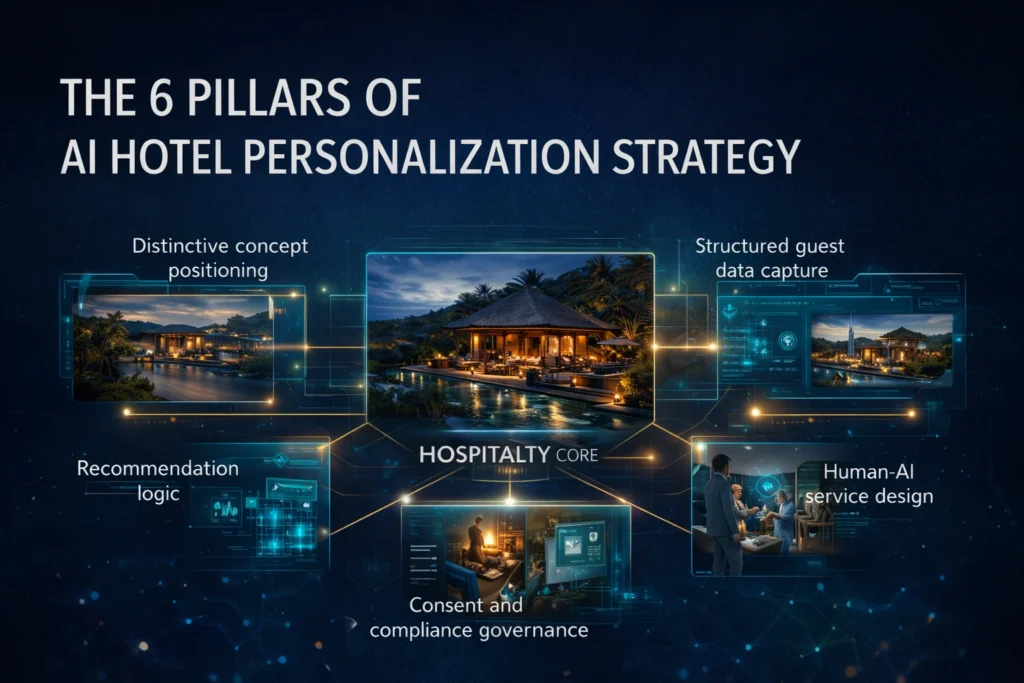
In practice, these pillars must work together. A distinctive concept without guest intelligence remains generic at service level. A good CRM without a strong concept produces accurate but uninteresting offers. And automation without service design creates friction instead of value.
How should hotel owners think about the commercial upside?
Owners should think about this through three lenses: visibility, conversion, and spend per guest. A stronger concept improves discoverability. Better guest intelligence improves conversion relevance. Better service orchestration increases ancillary spend and repeat intent.
The commercial upside is not theoretical. It sits in more direct bookings, better upsell timing, higher ancillary capture, stronger repeat-guest recognition, and less waste in promotional activity. EY’s hospitality work also points to AI’s impact on direct booking strategy, revenue management, and NOI improvement.
But there is a warning here. Hotels that install AI tools without fixing the product, the data structure, or the operating model do not become future-ready. They simply automate inconsistency.
Warning
The market is not rewarding “AI features” in isolation. It is rewarding hotels that become easier to recommend, easier to book, and easier to experience in a more relevant way.
How should technology directors structure the stack?
Technology directors should design for interoperability, not feature accumulation. The objective is not to buy the most tools. The objective is to build one usable guest-intelligence loop.
At minimum, the stack needs to connect website, booking engine, PMS, CRM, messaging, and operational workflows. If those systems cannot pass guest context cleanly across departments, personalization will remain fragmented.
A useful test is simple. Can the hotel answer these five questions in real time?
- Who is this guest?
- What do they probably value most on this stay?
- What should we offer next?
- Which staff action matters right now?
- What should we remember for the next stay?
If the answer is no, the property does not yet have a working AI hotel personalization strategy. It has disconnected software.
Why is Bali and Indonesia an early-mover opportunity?
Bali and Indonesia are an early-mover opportunity because adoption is still uneven. Some brands are moving into AI-enhanced discovery, pricing, messaging, and guest-service design. Many independent hotels, villas, and mixed-use hospitality assets are still operating with fragmented systems, generic brand language, and manual personalization.
That gap creates room for leapfrogging. An owner who gets concept clarity, clean guest-data capture, and selective personalization right now can stand out against a large field of visually attractive but strategically undifferentiated competitors.
This opportunity is strongest when linked to local context. Bali should not copy a cold automation model from other markets. The winning format is hybrid: systems handle repetitive, data-heavy tasks while people deliver warmth, confidence, and culturally intelligent service. That logic is consistent with our earlier argument in AI in Hospitality Indonesia and with the broader digital direction covered in our Bali digital transformation article.

How to build an AI hotel personalization strategy
Below is a practical starting sequence for developers, owners, and operators who want to move from theory into execution.
Step 1: Define the non-generic promise
Write a one-sentence positioning statement that an AI assistant could understand immediately. If the line could describe ten other hotels, it is still too weak.
A good positioning statement is specific, commercially relevant, and discoverable. It should clarify who the property is for, what problem it solves, and why it is different.
Step 2: Audit all guest-data touchpoints
Map every point where the property currently captures or fails to capture guest preferences. Include website forms, booking flow, pre-arrival emails, WhatsApp, check-in, concierge, spa, dining, and post-stay surveys.
The goal is to find where context is lost. Most hotels discover that preference capture is inconsistent, departmentally siloed, or never translated into action.
Step 3: Build a minimum viable preference model
Start with a short list of fields that are operationally useful. For most luxury assets, that means stay purpose, dietary notes, room environment preferences, celebration context, wellness goals, and service pace.
Do not start with twenty fields. Start with the small set your teams can actually use.
Step 4: Prioritize three high-value personalization use cases
Choose the use cases that directly improve guest experience and economics. A good sequence is personalized pre-arrival messaging, relevant upsell recommendations, and repeat-guest recognition.
This creates a clear operational pilot. It also prevents the common mistake of trying to personalize everything at once.
Step 5: Design the human-AI handoff
Decide which tasks should be automated and which should stay human-led. Booking confirmations, FAQ handling, routine routing, and basic preference collection can be automated.
Complaints, recovery moments, celebrations, nuanced itinerary design, and sensitive guest interactions should remain in human hands.
Step 6: Measure what matters
Track whether the system is changing outcomes. Watch preference capture rate, upsell conversion, ancillary spend, repeat-guest recognition, guest-satisfaction signals, and direct-booking performance.
If the data does not show improved relevance or improved economics, the model needs revision.
What are the biggest mistakes hotels will make?
The first mistake is treating AI as a marketing accessory. A chatbot on a generic hotel does not create a differentiated asset.
The second mistake is over-automation. Luxury hospitality still depends on emotional intelligence, confidence, and human judgment. Automation should remove friction, not flatten the guest experience.
The third mistake is weak data governance. Indonesia’s Personal Data Protection Law has made guest-data handling a board-level issue, not just an IT detail. Hotels need clear consent, clear purpose, and clear control over how preference data is used. A useful legal overview is available in this summary of Indonesia’s Personal Data Protection Law.
PAA: Will AI make hotel websites less important?
AI will make weak hotel websites less important and strong hotel websites more important. Shallow, generic sites will lose traffic and influence because AI can extract commodity information elsewhere. Rich, well-structured, story-driven websites remain critical because they give AI better material to interpret and recommend.
That is why the right question is not whether websites will disappear. The right question is whether your site is useful to both humans and machines. Hospitality Net has been discussing this directly in its industry panel on whether AI will make hotel websites obsolete.
PAA: Can independent luxury hotels compete with larger brands on personalization?
Yes—if they are sharper, not bigger. Independent hotels often have an advantage because they can move faster, simplify decision-making, and build a more coherent concept-to-service model without as much internal complexity.
But the discipline still matters. Independent luxury does not win through improvisation. It wins when a distinctive concept is matched with structured data, selective automation, and highly intentional service design.
PAA: Does AI hotel personalization strategy improve revenue or only guest experience?
It improves both when executed properly. Better personalization increases relevance, and relevance drives conversion, ancillary spend, and repeat intent.
The key is that personalization must be operationally useful. Sending more offers is not enough. Sending the right offer to the right guest at the right time is where commercial value appears.
What should developers and owners do now?
They should stop asking whether AI matters and start asking where generic luxury is already costing them visibility. The window for easy differentiation is still open, especially in Bali and Indonesia, but it will not stay open for long.
The correct move is not to buy technology first. It is to tighten concept clarity, fix guest-data logic, define the right use cases, and then build an operator-grade personalization roadmap.
That is where Zenith can add value: not as a generic technology advisor, but as an operator-first partner that aligns concept differentiation, data strategy, guest-experience design, and commercial performance. For owners navigating broader investment and operating decisions in Indonesia, our work also connects to adjacent topics such as business strategy and compliance in Bali and hospitality ROI realism in Southeast Asia.
FAQ
Is this mainly a technology issue or a positioning issue?
It starts as a positioning issue and becomes a technology issue second. If the asset has no clear identity, no useful guest-data model, and no structured service logic, technology will not create a premium advantage. It will only digitize confusion. The right order is concept first, systems second, tooling third.
What is the main investor risk of ignoring this shift?
The biggest risk is slow commercial erosion rather than sudden collapse. Properties with generic positioning and weak personalization become easier to substitute, more dependent on intermediaries, and more exposed to price pressure. Over time, that affects ADR quality, direct-booking mix, ancillary capture, and ultimately asset value.
What is the main operator risk?
The main operator risk is fragmented execution. Teams collect data that never reaches the next department, service becomes inconsistent, and personalization turns into random memory rather than a repeatable system. This creates guest disappointment because the brand promise implies intelligence, but the operating model cannot deliver it.
Does every hotel need a large AI budget?
No. Most properties should begin with clear positioning, better data hygiene, and a small number of high-impact use cases. A disciplined pilot—pre-arrival personalization, better upsells, repeat-guest recognition—usually creates more value than a large, poorly integrated technology spend.
How should Bali properties localize this without losing soul?
By using AI to support the guest journey, not replace the human experience. In Bali, the most effective model is operationally intelligent but emotionally warm. Technology should reduce friction in the background while people deliver trust, local nuance, ritual, and hospitality presence in the foreground.
Summary Takeaways
- Generic luxury is becoming weaker because AI rewards specificity and compresses sameness.
- AI hotel personalization strategy now starts at concept and operating-model level, not at chatbot level.
- The strongest properties will be both AI-discoverable and humanly memorable.
- In Bali and Indonesia, uneven adoption creates a real early-mover advantage.
- Over-automation is a mistake; the winning model is selective automation plus stronger human delivery.
- Owners should fix concept clarity, guest-data logic, and use-case design before expanding the tech stack.
Call to Action
If your asset still reads like generic luxury, this is the right time to correct it. Zenith helps developers, hotel owners, and operators build concept-led hospitality systems that are commercially sharper, operationally executable, and ready for AI-shaped discovery and personalization.
If you want a working review of your concept positioning, guest-data strategy, and personalization roadmap, contact Zenith Hospitality Global.
Author
André Priebs
CEO & Co-Founder, Zenith Hospitality Global
André Priebs advises developers, owners, and investors on luxury boutique hotels, wellness retreats, mixed-use hospitality, and operator-led destination concepts in Bali and across Indonesia. His work focuses on concept DNA, pre-opening governance, operating systems, commercial performance, and future-ready hospitality design.